The Gabus Horological Collection
Pieces from The Gabus Horological Collection, with documented reference examples.
Held
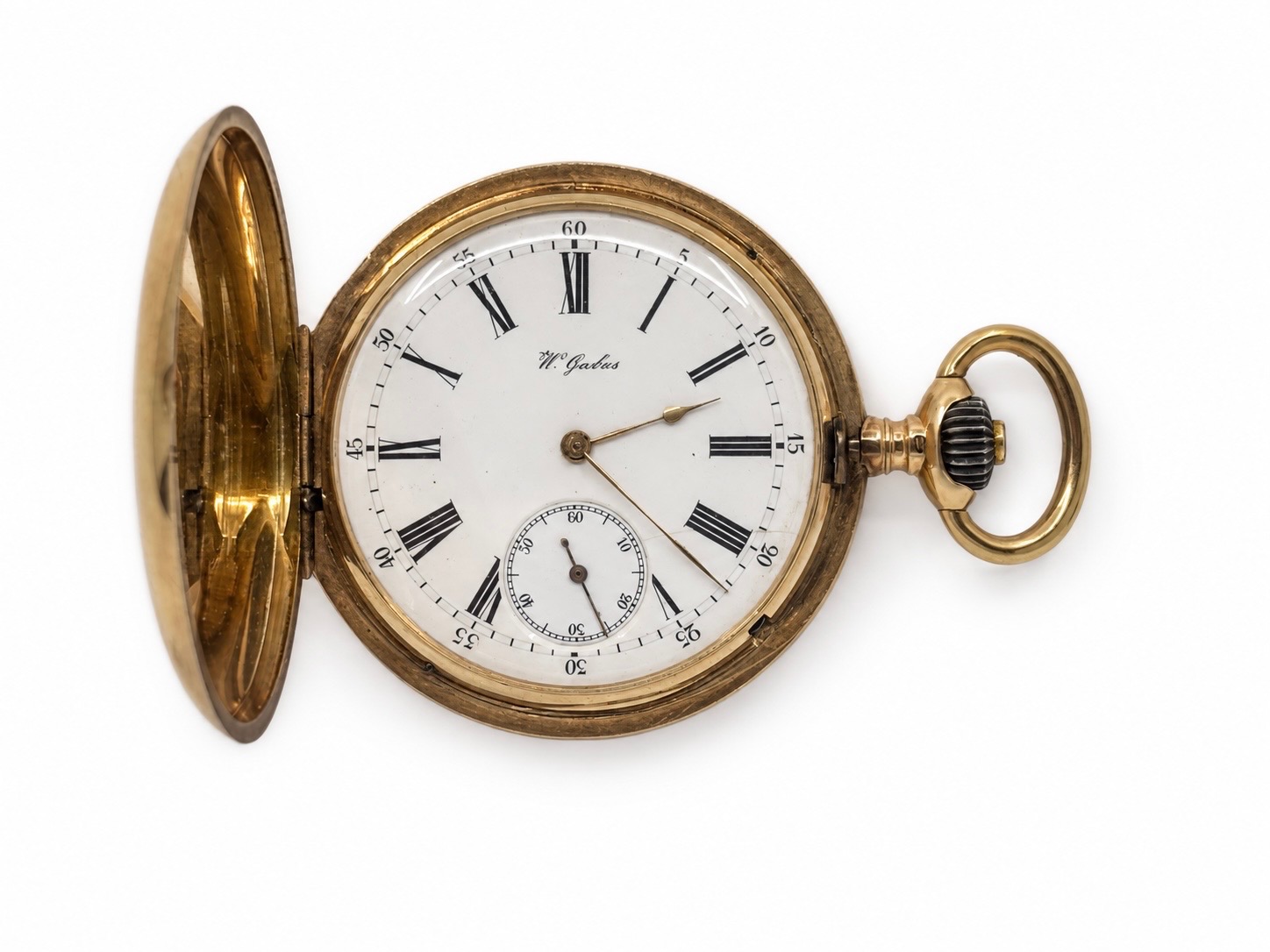
W. Gabus Gold Hunter-Case Pocket Watch
14 K gold hunting case, enamel dial with subsidiary seconds. Struck with a Swiss control punch, wreathed maker’s initials and case no. 18322.
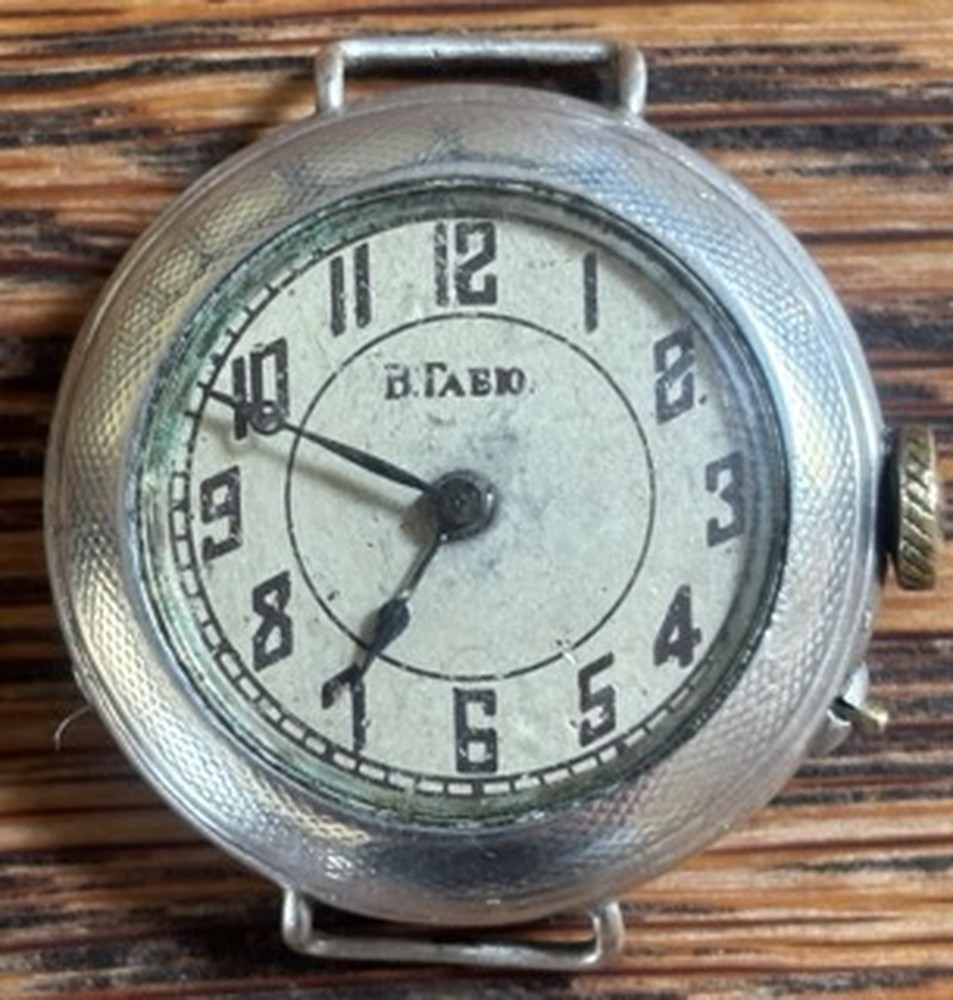
Silver Trench Watch
В. ГАБЮ, Moscow. Russian silver case, wire lugs. Transitional wartime form.
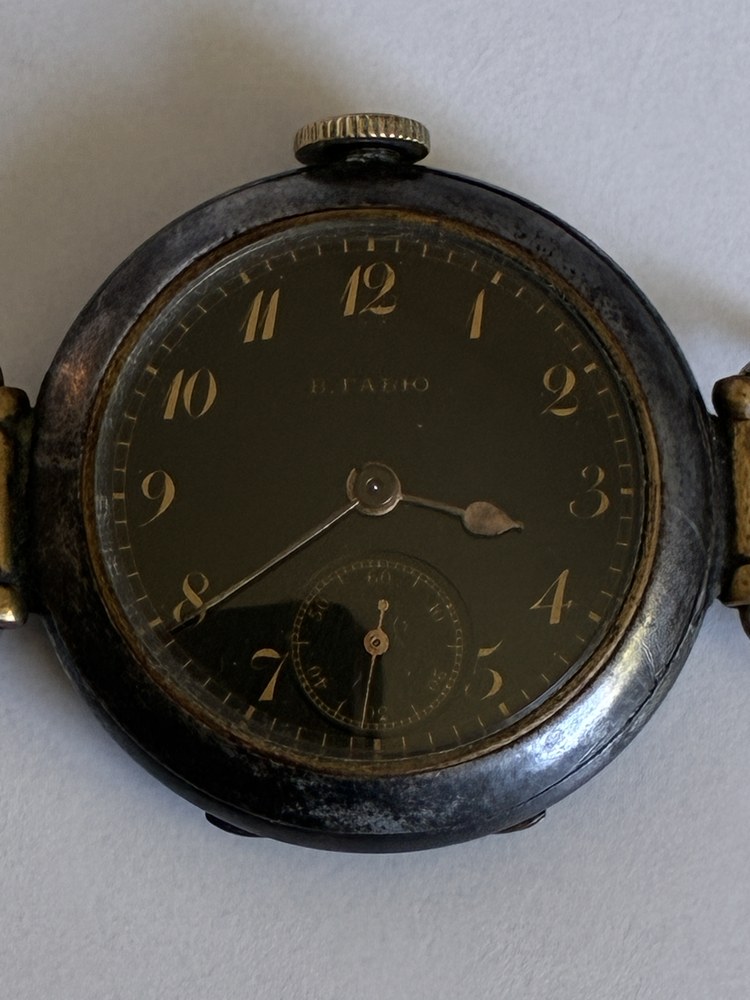
WWI Officer’s Wristwatch
Black steel case, black Arabic dial. Designed for legibility under stress.
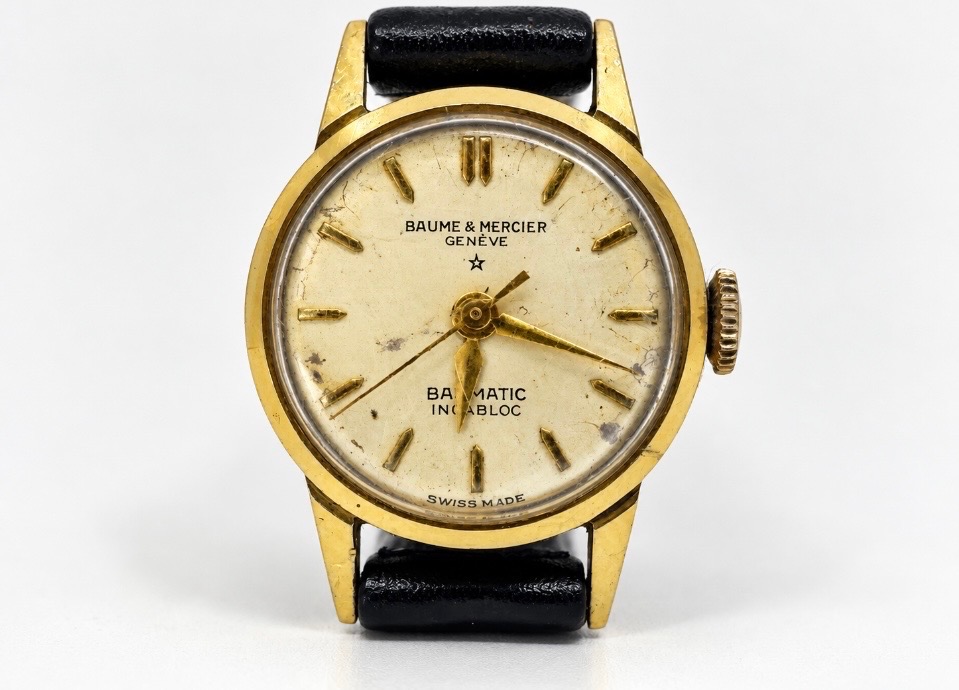
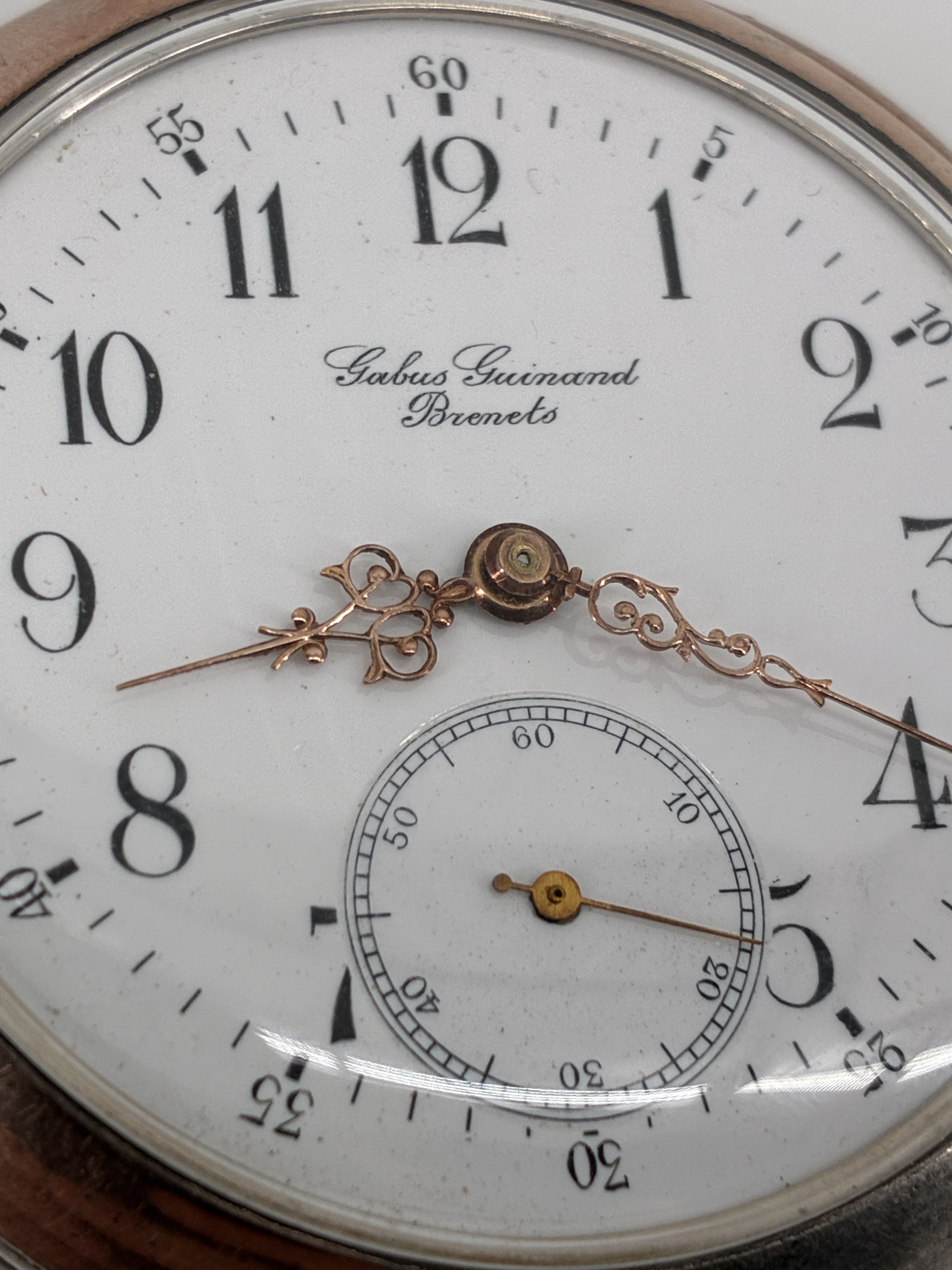
Reference Examples
See the №141 case-attribution ledger.
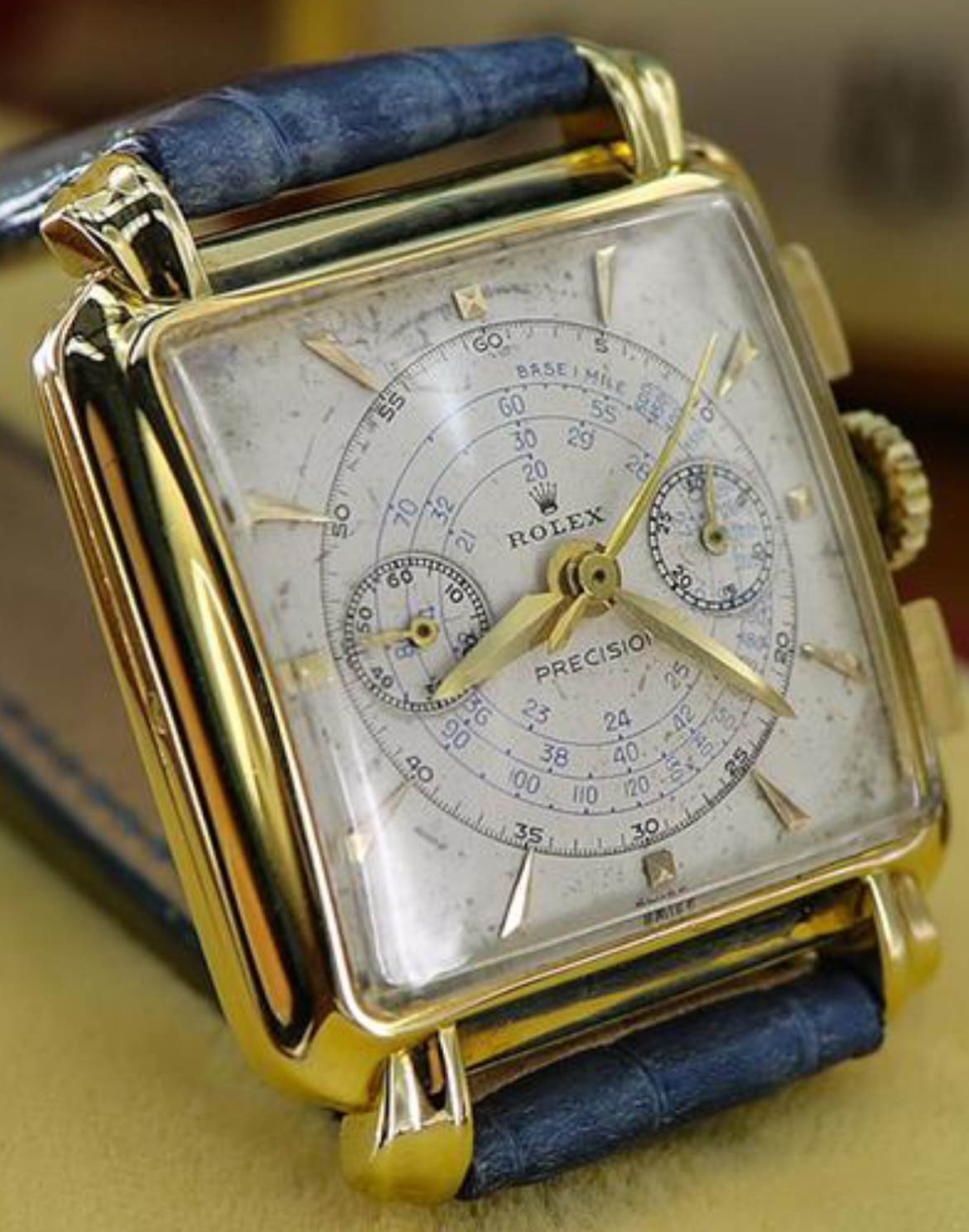
Rolex Ref. 8206
Known to collectors as the “Rolex Gabus.” Produced in 1949. Square case by Gabus Frères, Le Locle. Production figures for the reference are unsettled: Christie's cites 37 examples in 18ct yellow gold; a figure of 37 in yellow and 37 in pink gold, 74 in total, circulates across several auction houses; Lyon & Turnbull records approximately 12 examples appearing publicly since 1992. Examples in yellow, pink and rose gold are documented on the Sightings page. Examples made and examples known are not the same measure.
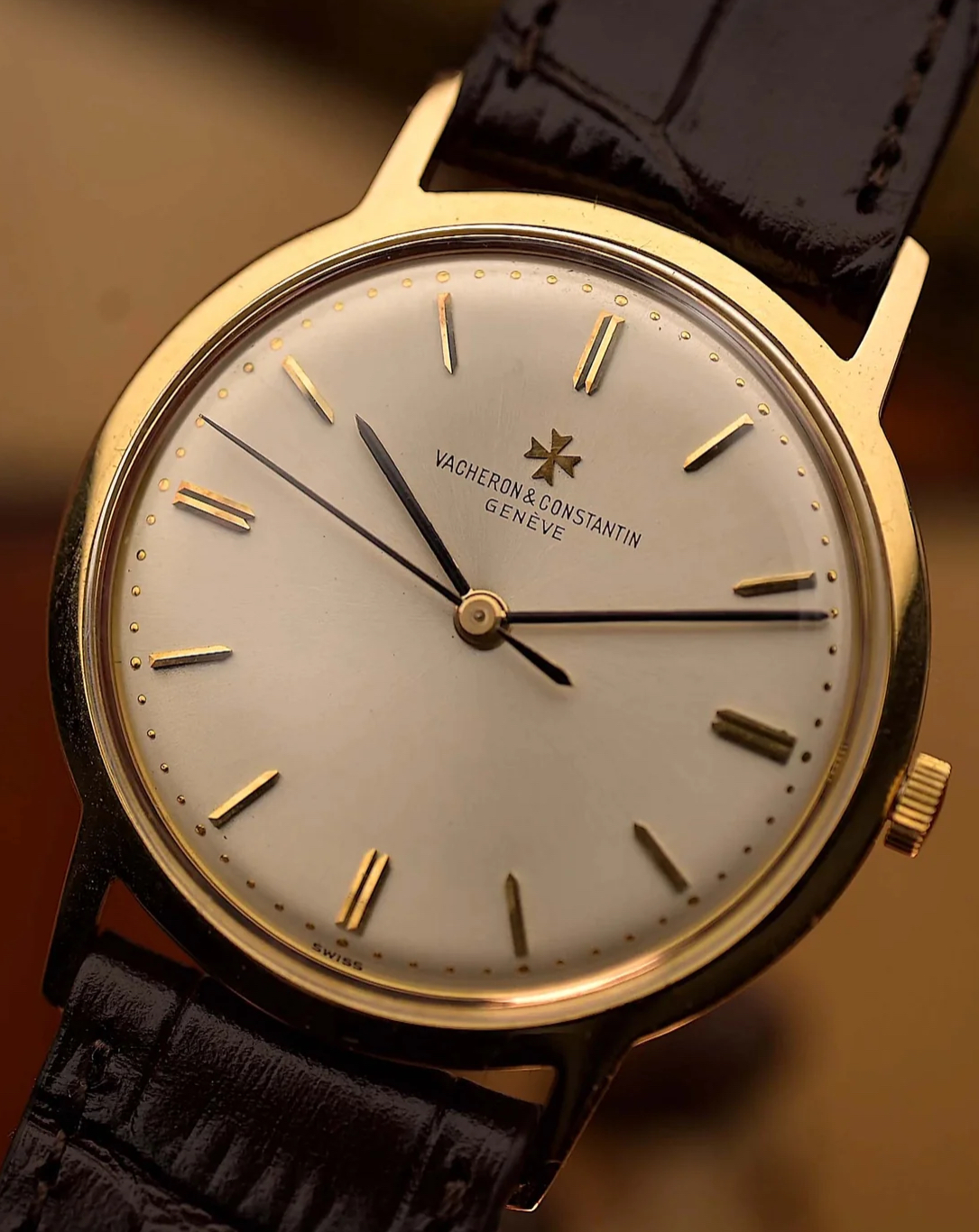
Vacheron Constantin Patrimony Ref. 6507
Ultra-thin case by Gabus Frères. Hammerhead №141 confirmed on caseback, alongside the engraved brevet number 356411 — Gabus Frères' 1959 case-construction patent (CH356411A).
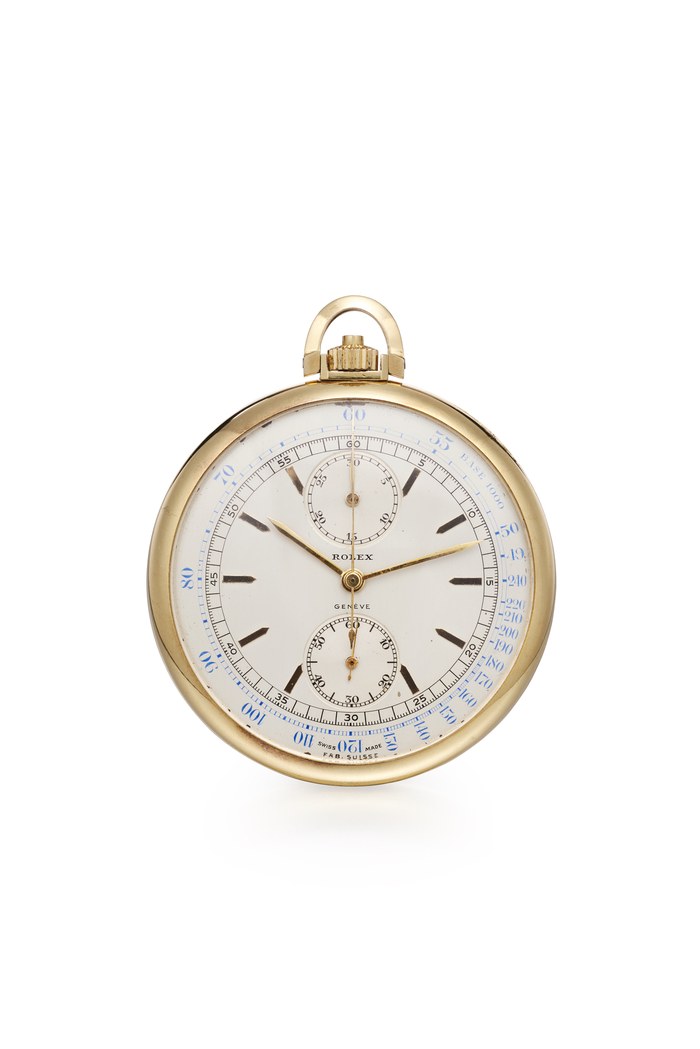
Rolex Ref. 3068
Case based on Gabus Frères patent No. 144,357 (1930), Usines Safir, Le Locle. Antiquorum Hong Kong, 2019.
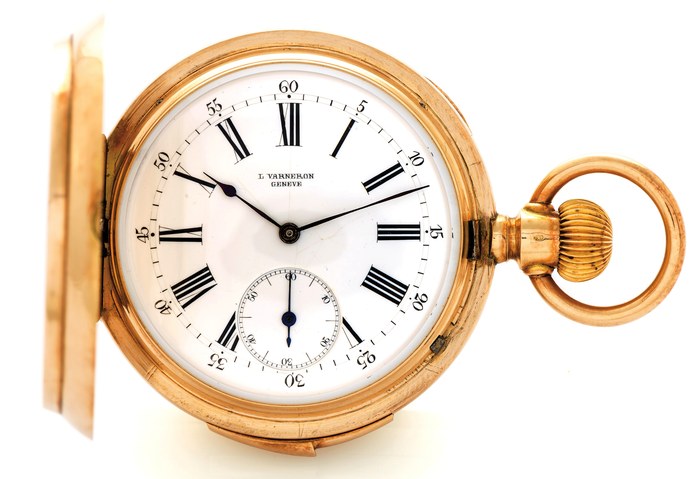
Gabus-Guinand Quarter Repeater
14K gold hunting-cased quarter-repeater, No. 22591, c. 1890 — retailed by L. Varneron, Genève. A repeater complication represents some of the most demanding work a watchmaking house of this era could put its name to. Sold Antiquorum Geneva, 2014.
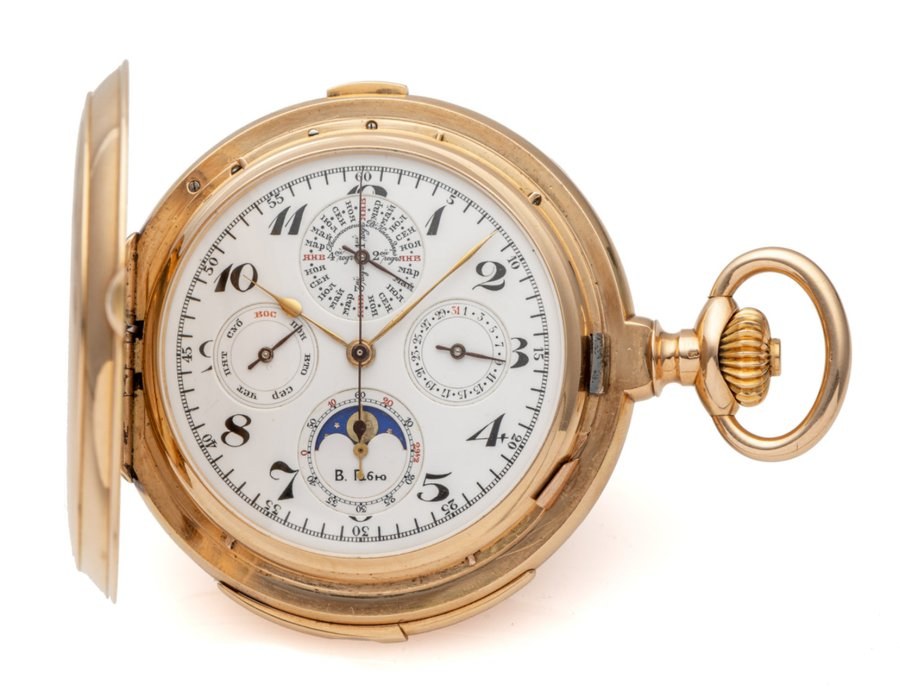
W. Gabus Grand Complication, Case No. 23908
Le Locle · c. 1910 · 14K gold. Minute-repeating, hunting-cased, chronograph, perpetual calendar, moonphase. В. ГАБЮ signature on the moonphase dial — case made in Le Locle, retailed under the Moscow house. Sold twice at Antiquorum Geneva, in May 2021 and again in November 2025, the later sale recording case no. 23908.
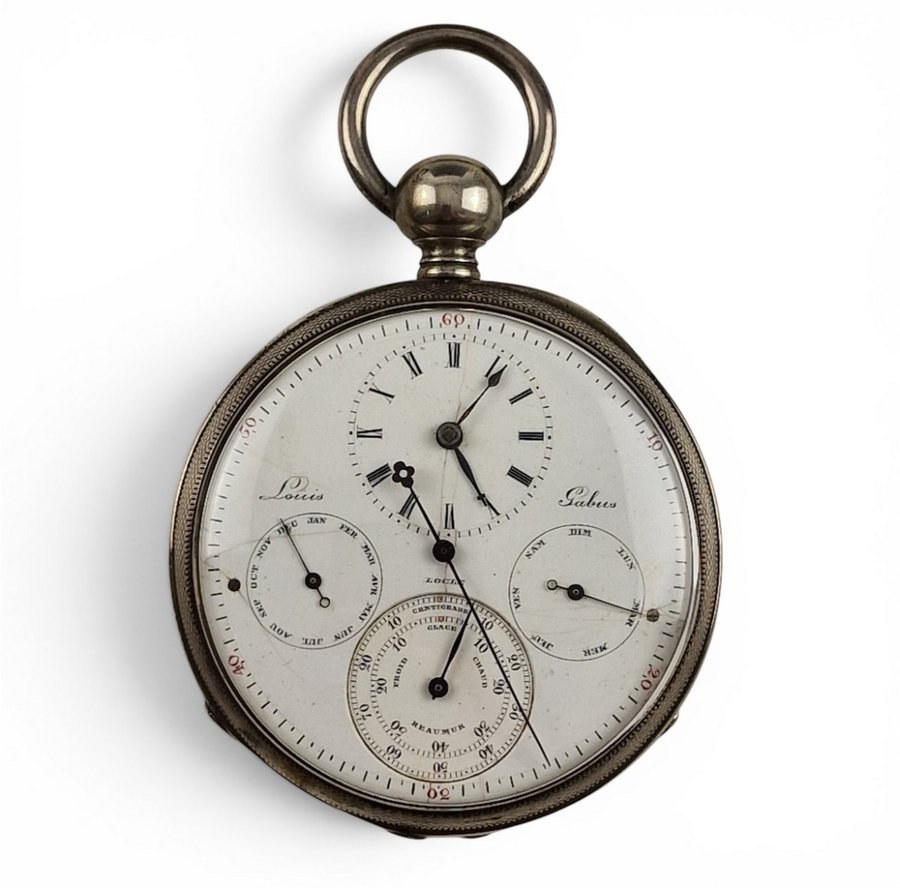
Louis Gabus Double-Calendar Chronometer with Thermometer
Le Locle · case marked “chronomètre 1863” · silver. “Louis” and “Gabus” split across the dial — Louis Gabus, father of Louis William Gabus, founder of the Moscow house (W. Gabus). Unusual Réaumur/Centigrade thermometer scale.
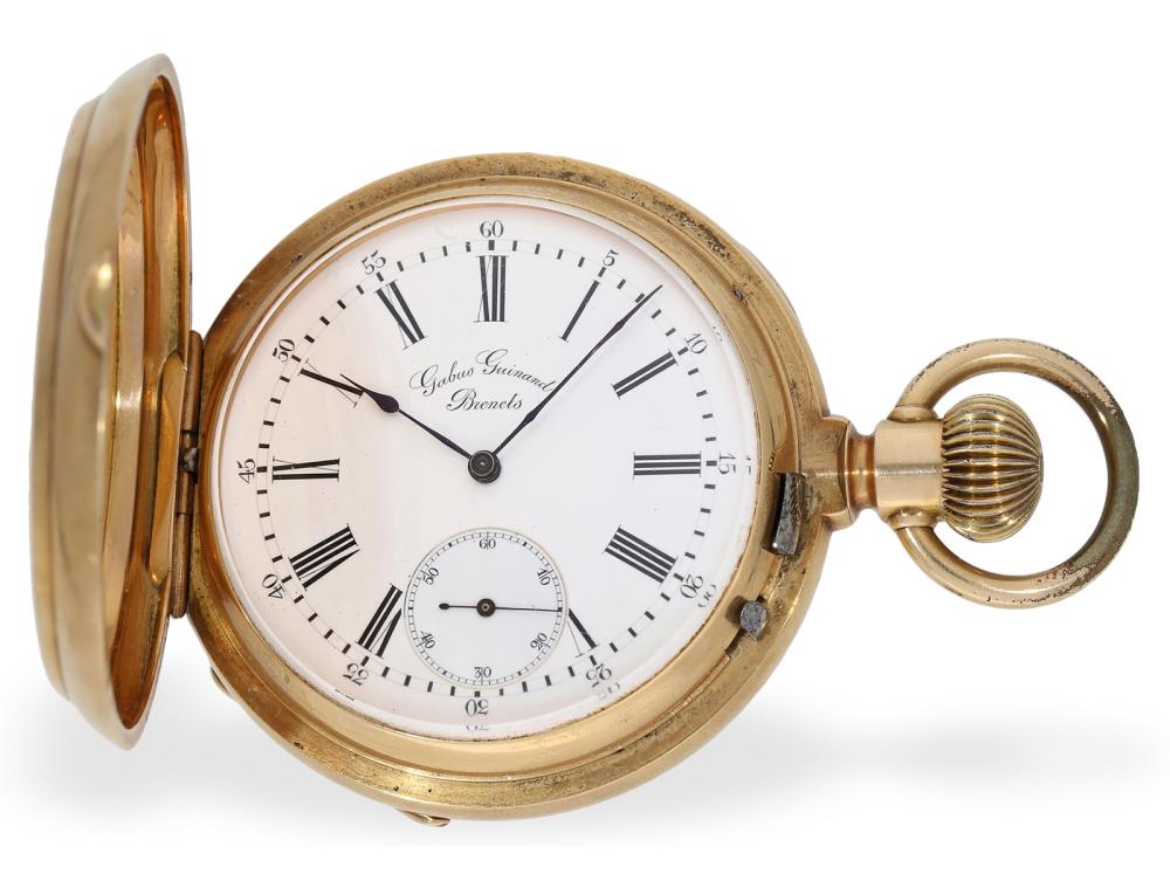
Gabus-Guinand Chronometer, No. 12275
14K pink-gold hunting case fitted with a pivoted-detent chronometer movement, No. 12275, c. 1890 — dome signed and inscribed “CHRONOMETRE.” Very fine Swiss pivoted detent chronometer movement, screwed gold chatons, helical hairspring, pink gold motion train, original enamel dial, blued steel hands. The Gabus-Guinand watch factory, Grande Rue, Les Brenets, was primarily a supplier to the Russian Tsarist Empire. Sold Cortrie Spezial Auktionen, Hamburg, May 6, 2023.
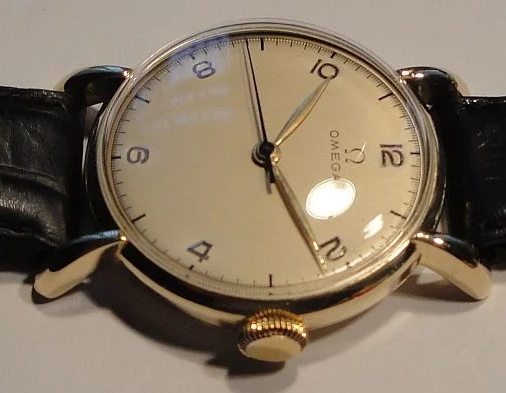
Omega, Case No. 10730397
Gold case, c. 1946. Caliber 30T2SC, Omega's flagship manual-wind movement of the era. Cream dial signed Omega, applied Arabic numerals, curved flared lugs. Caseback carries Omega Watch Co. maker's marks and the Hammerhead №141, identifying Gabus Frères, Usine Safir S.A. — the firm's name at that date — as case maker.
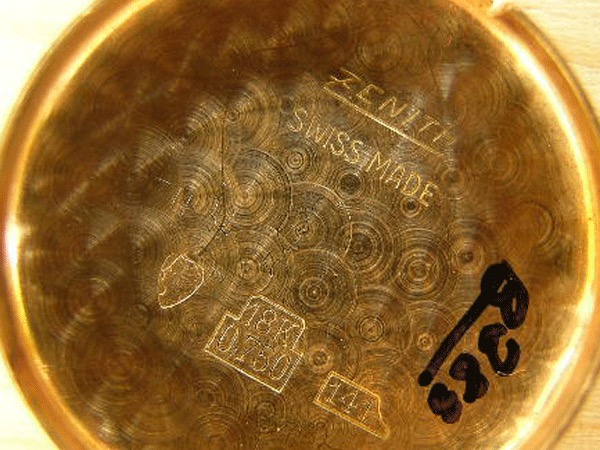
Zenith Ladies' Dress Watch, 1949
18ct pink gold, dated 1949 by the dealer. Caseback struck with the Hammerhead №141. Zenith relied on independent case makers rather than producing its own; both firms were established at Le Locle.
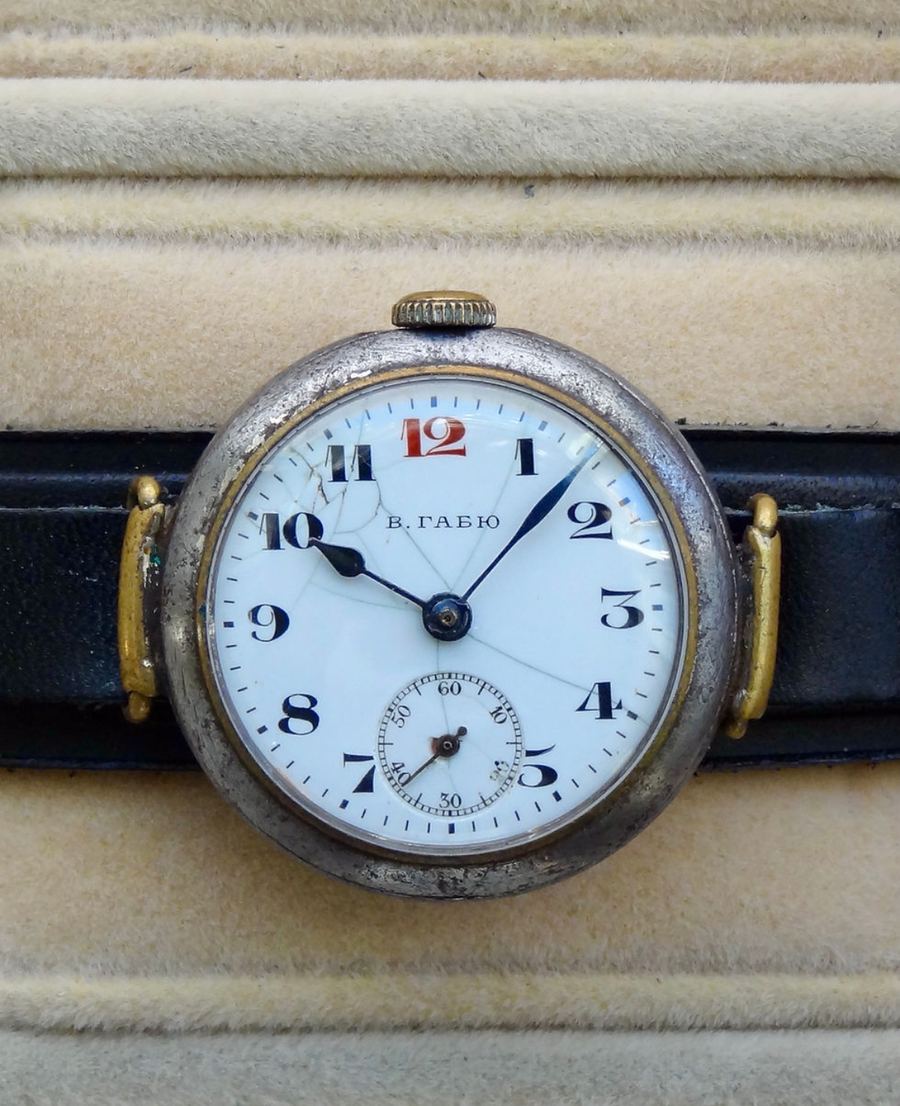
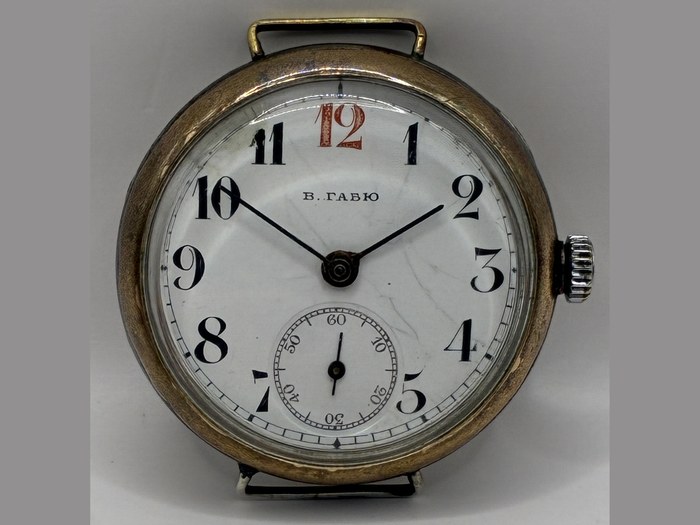
W. Gabus Wristwatch, Red-12 Dial
В. ГАБЮ · Swiss caliber · c. 1915 · black leather strap. Shares the red-painted “12” dial convention seen on the held Imperial Russian Pocket Watch.
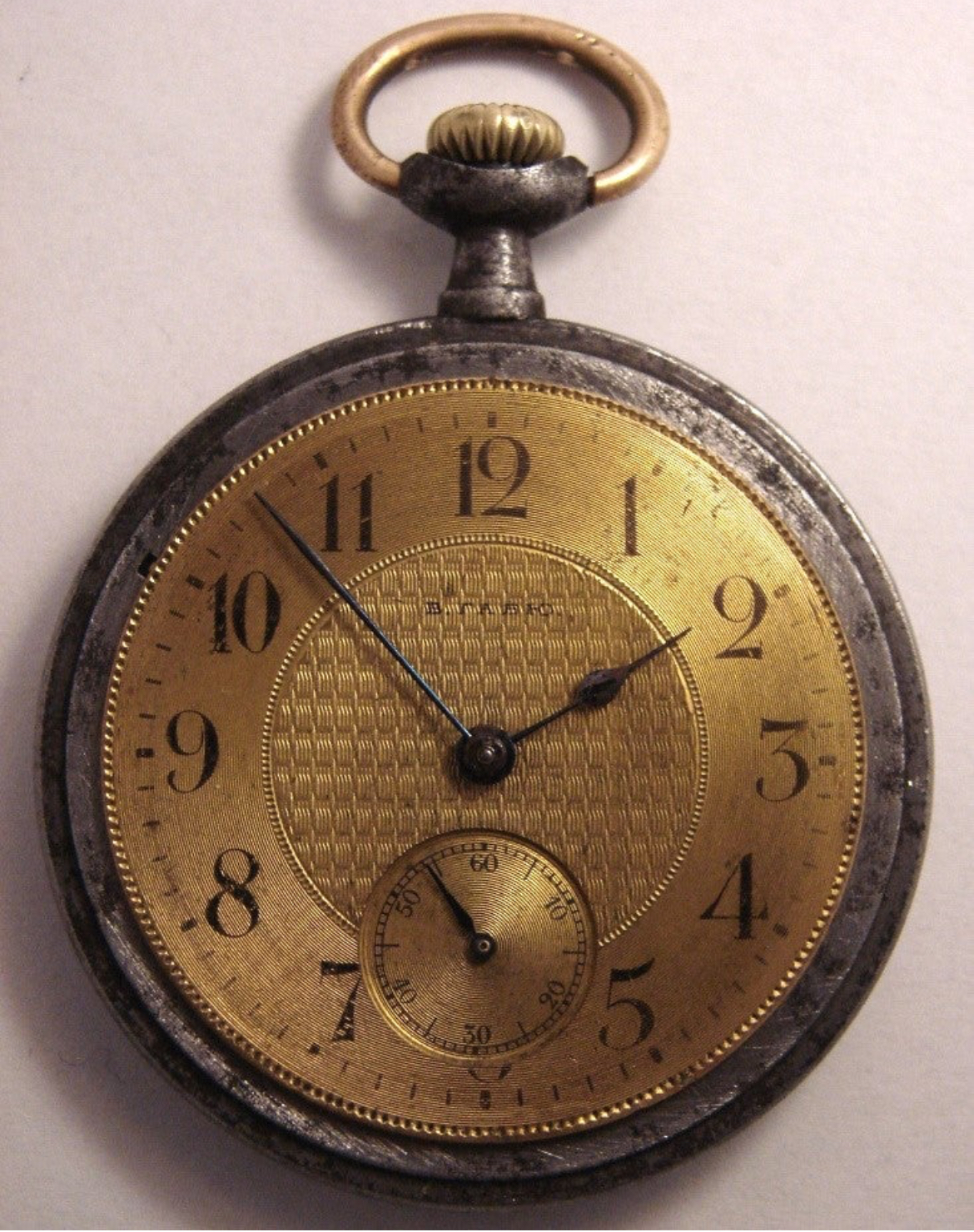
W. Gabus Zenith, Steel Pocket Watch
Steel case, cuvette marked В. ГАБЮ, Zenith movement inside. Likely produced c. 1910–1920, just before or after the 1917 Revolution. Documented in a collector's restoration account shared on NAWCC and Watchuseek forums.
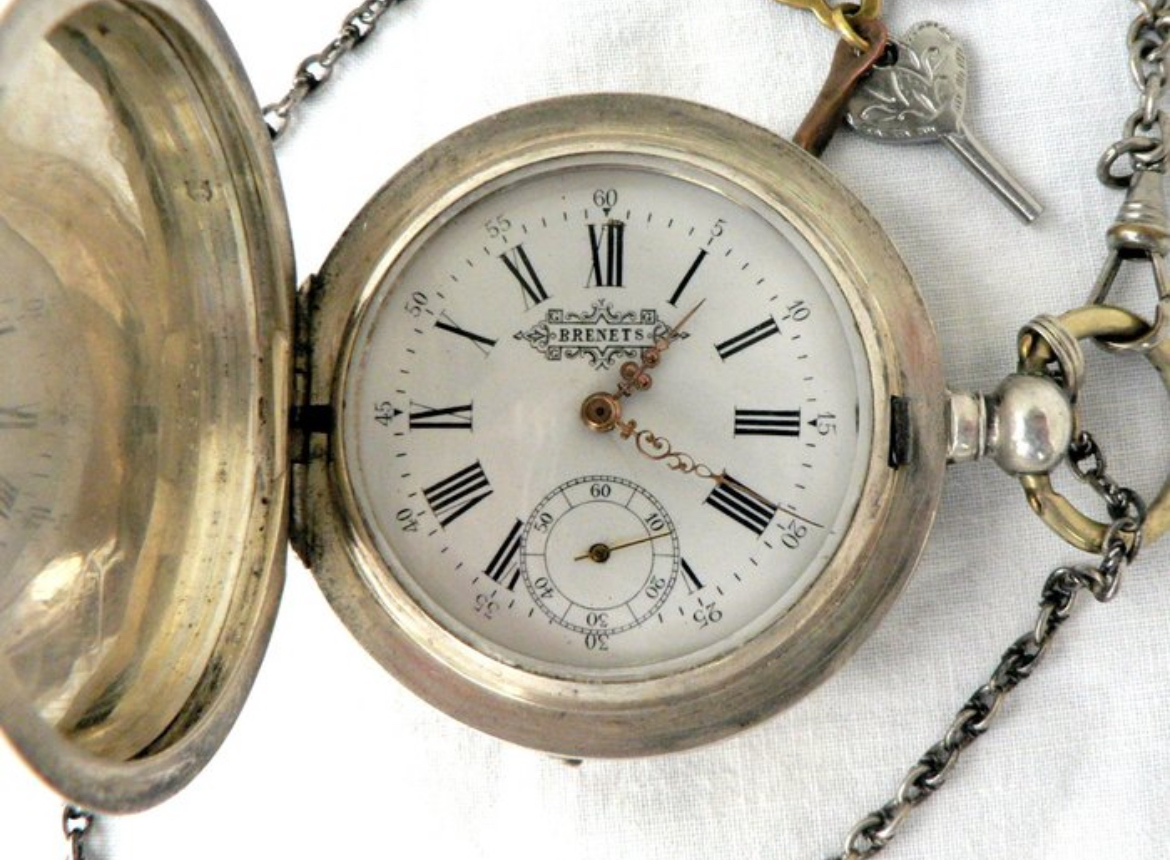
Gabus-Guinand Savonette, Russian Market, c. 1892
Silver savonette signed on the cuvette “Ancre 15 Rubis · Gabus-Guinand · Brenets,” with engraved arms and a cannon motif. Russian 84 zolotnik / 875 hallmarks — made for the Tsarist market. Three-finger bridge movement, anchor escapement after Mairet, bimetallic compensation balance. 57mm. Auction listing gives a registration date of 19 December 1892, within the firm’s documented 1887–1897 filing period.
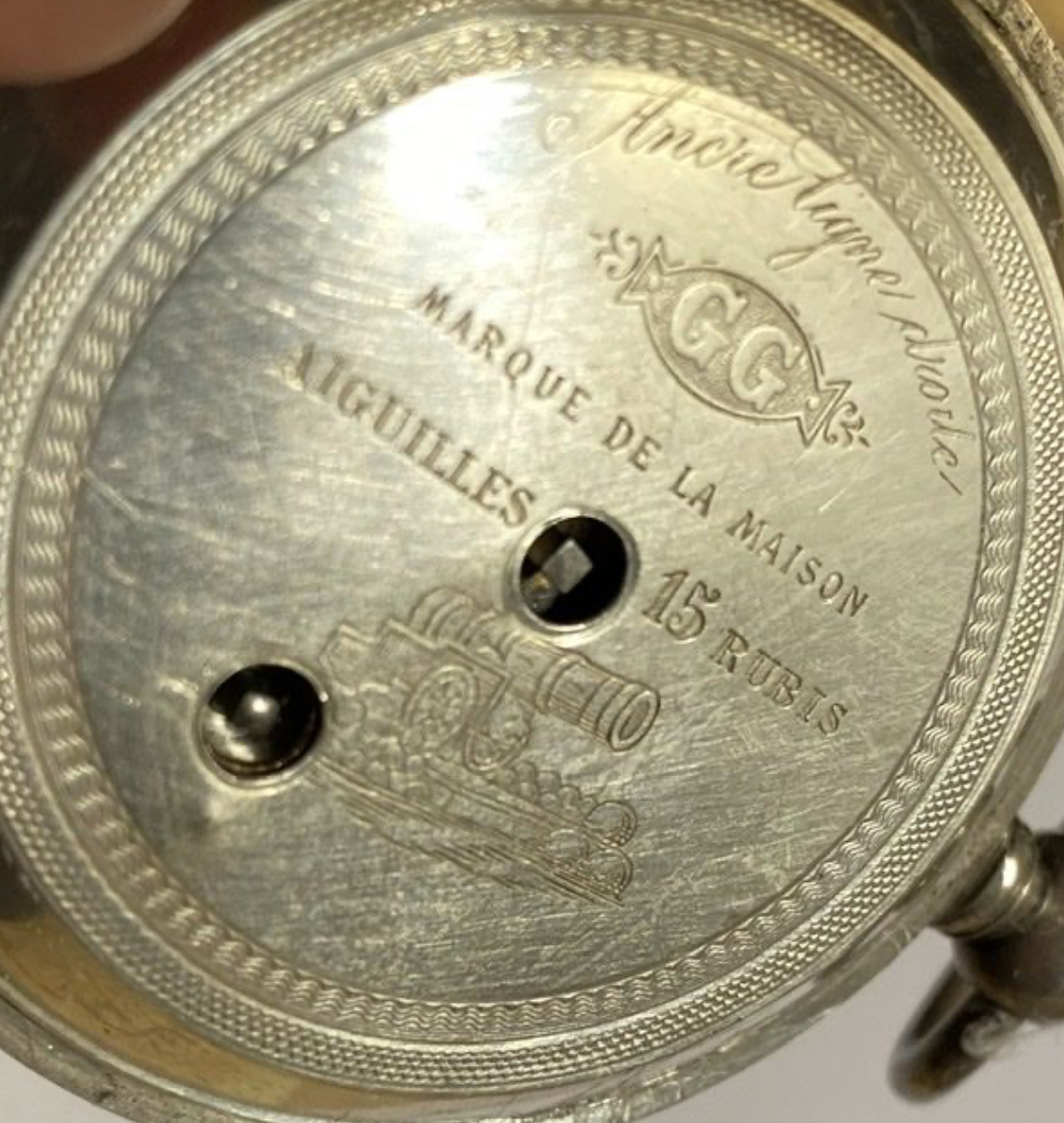
Gabus-Guinand Silver Pocket Watch, Russian Market, No. 58810
Silver pocket watch, key-wind and key-set, engraved case back. The cuvette carries the “G. G.” cartouche with “Marque de la Maison,” the script “Aiguilles ⊙ 15 Rubis,” “Ancre ligne droite,” and an engraved cannon. The inner case back carries a struck cartouche with a second cannon device, “Marque de la Maison / Brenets Suisse,” and a “G. G.” banner, hallmarked 0.875 with 84 zolotnik in an octagonal cartouche — the Russian silver standard, given in both systems. Case No. 58810, with M and 8 struck beneath. The cannon device recurs across the firm’s 1887 and 1892 filings; which registration each of these two marks corresponds to is not established here.
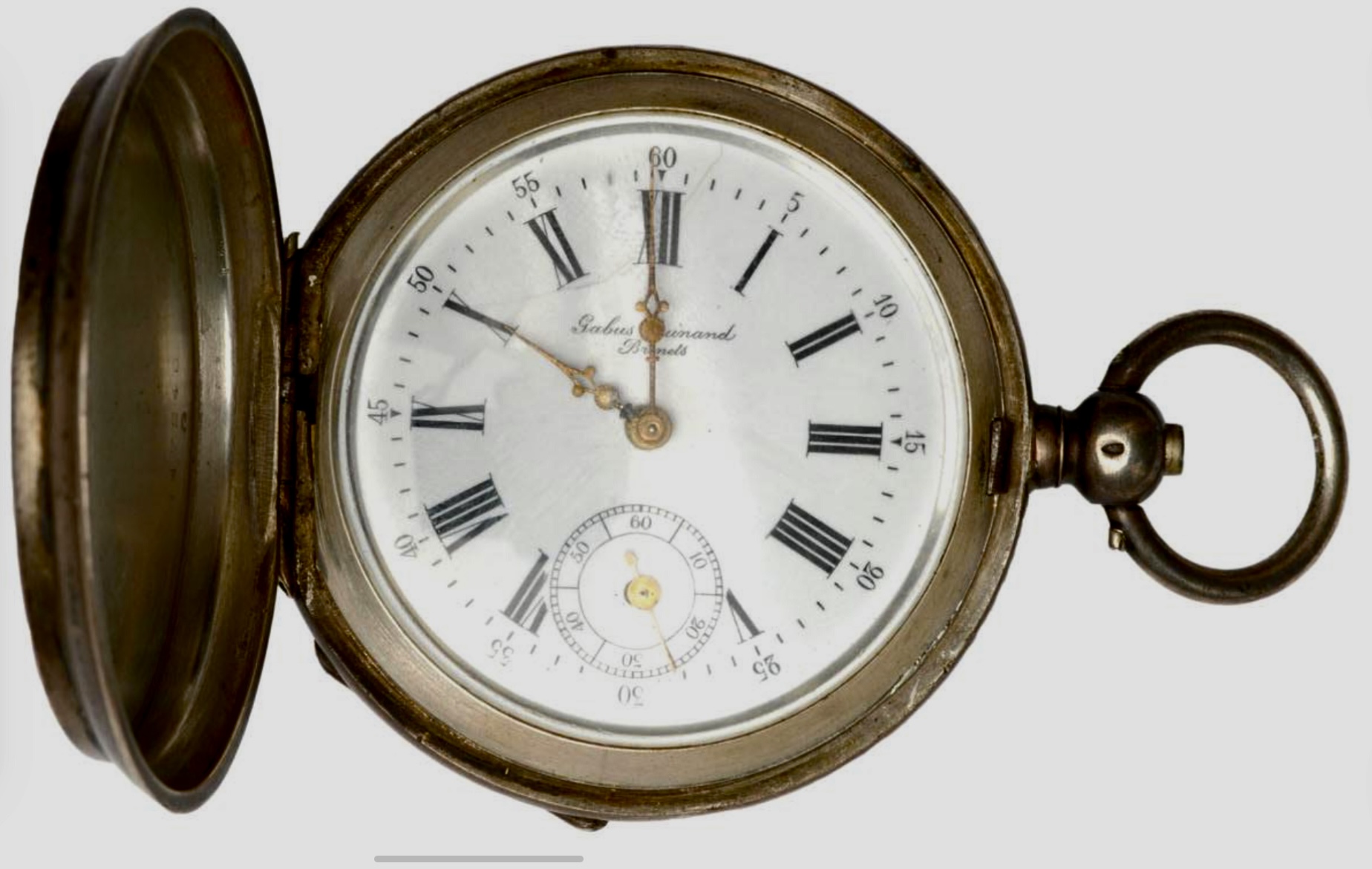
Gabus-Guinand Prize Watch, Russian Market, No. 347246
Silver open-face pocket watch, 875 standard, 89.33 g, 61 × 50 mm, dial signed “Gabus Guinand Brenets.” The case back is engraved «ЗА ОТЛИЧНУЮ СТРЁЛЬБУ» — “For Excellent Marksmanship” — with crossed rifles over a target on an engine-turned ground, the pattern awarded for shooting proficiency in the Imperial Russian army. Hallmarked 84 over 0.875, the Russian silver standard given in both systems. Catalogued by Eremeevs in 2007 as Swiss, 1880s–1890s, condition VF–XF.
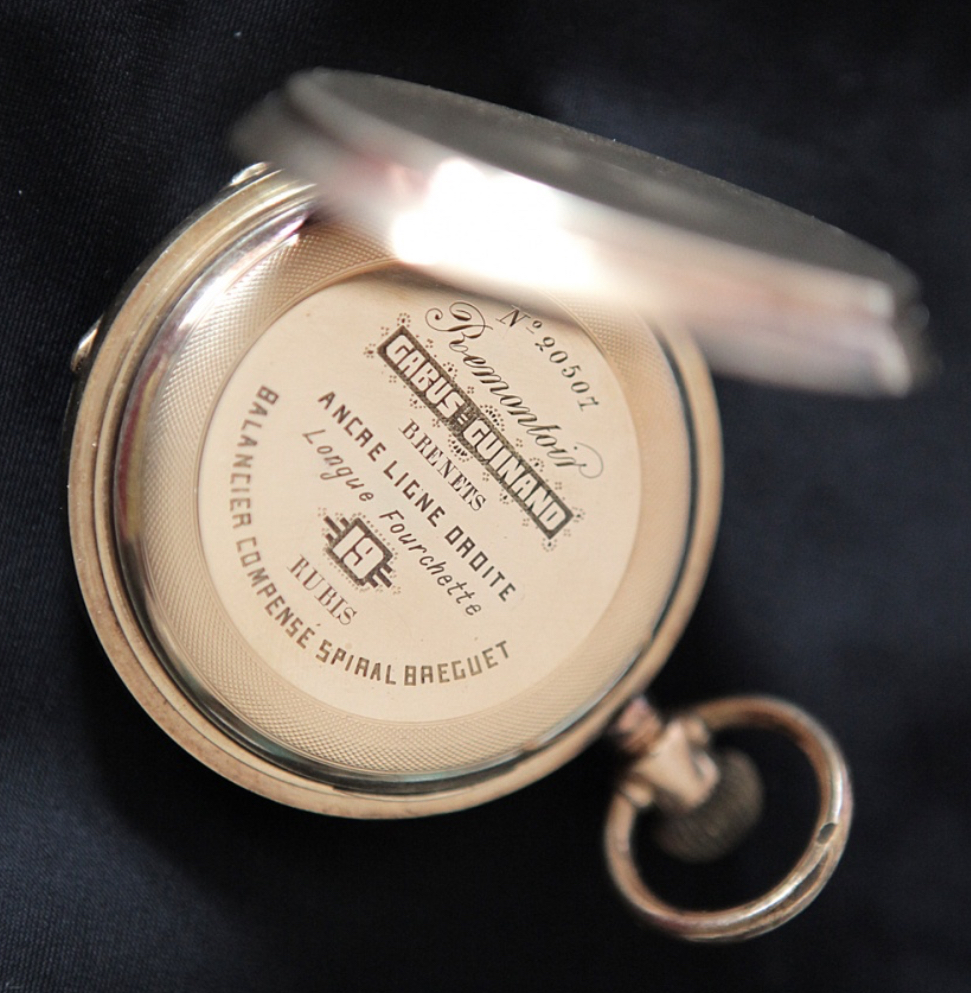
Gabus-Guinand Hunter, Russian Market, No. 20507
Hunting-cased pocket watch, keyless, with a Cyrillic owner’s monogram engraved on the case back. The cuvette is printed “Remontoir · Gabus-Guinand · Brenets · Ancre Ligne Droite · Longue Fourchette · 19 Rubis · Balancier Compensé Spiral Breguet · N° 20507” — close to the descriptive language of the firm’s 1892 registrations, though at a higher jewel count than those specify. Dial signed “Gabus Guinand Brenets,” sub-seconds at 9.
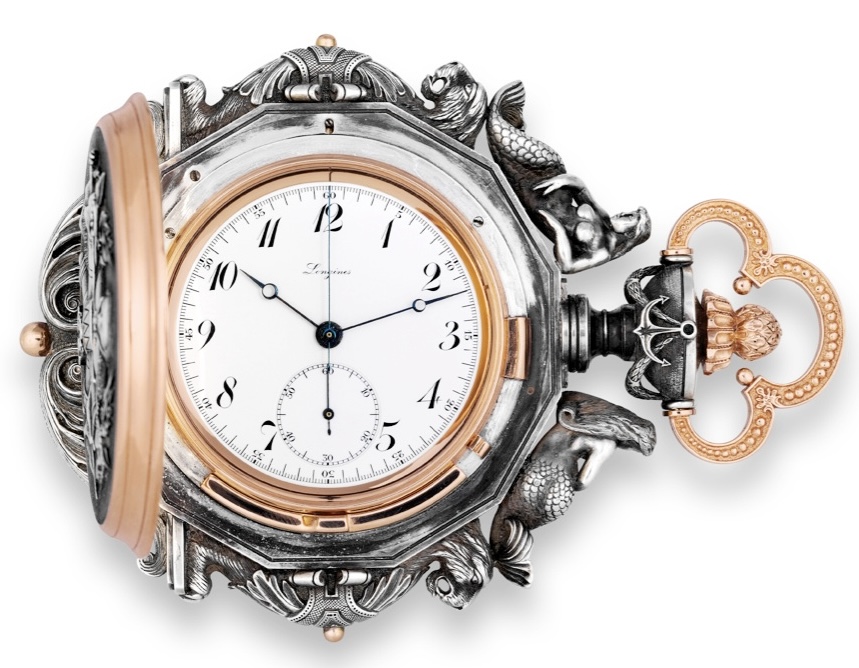
Longines Ushakov Commemorative, No. 2352324
Exhibition-type minute-repeating chronograph, 84mm, 14K pink gold and cast silver, made for the Russian market. The front cover carries a cast and chased high-relief bust of Admiral Fyodor Ushakov within a military trophy; the back, two warships at sea; the band is cast with chimera and surmounted by mermaids. Silver cuvette signed W. Gabus. Antiquorum records that the Longines Museum confirms the sale to Longines’ Russian agent Schwob in 1911, and that its archives suggest fewer than five of the type were made. Sold at Antiquorum, Hong Kong, October 2010.