Marks & Identification
Hammerhead №141
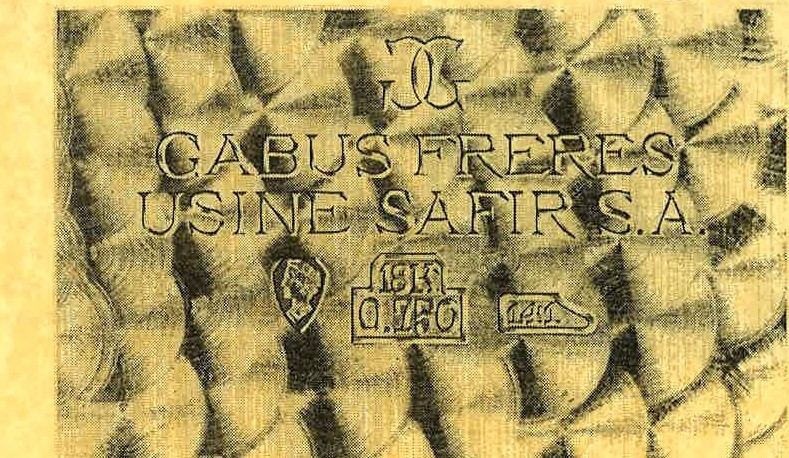
The federal register confirms Poinçon de Maître No. 141 registered to Gabus Frères, Oracier SA of Le Locle on 21 July 1934, deleted 26 June 1980. The firm appears in the 1934 Handelsamtsblatt at its Concorde address. A separate mark, FFBA No. 58, is also recorded for the firm's silver cases.
№141 — Gabus Frères' MaisonsCollective Mark No. 1 — the full register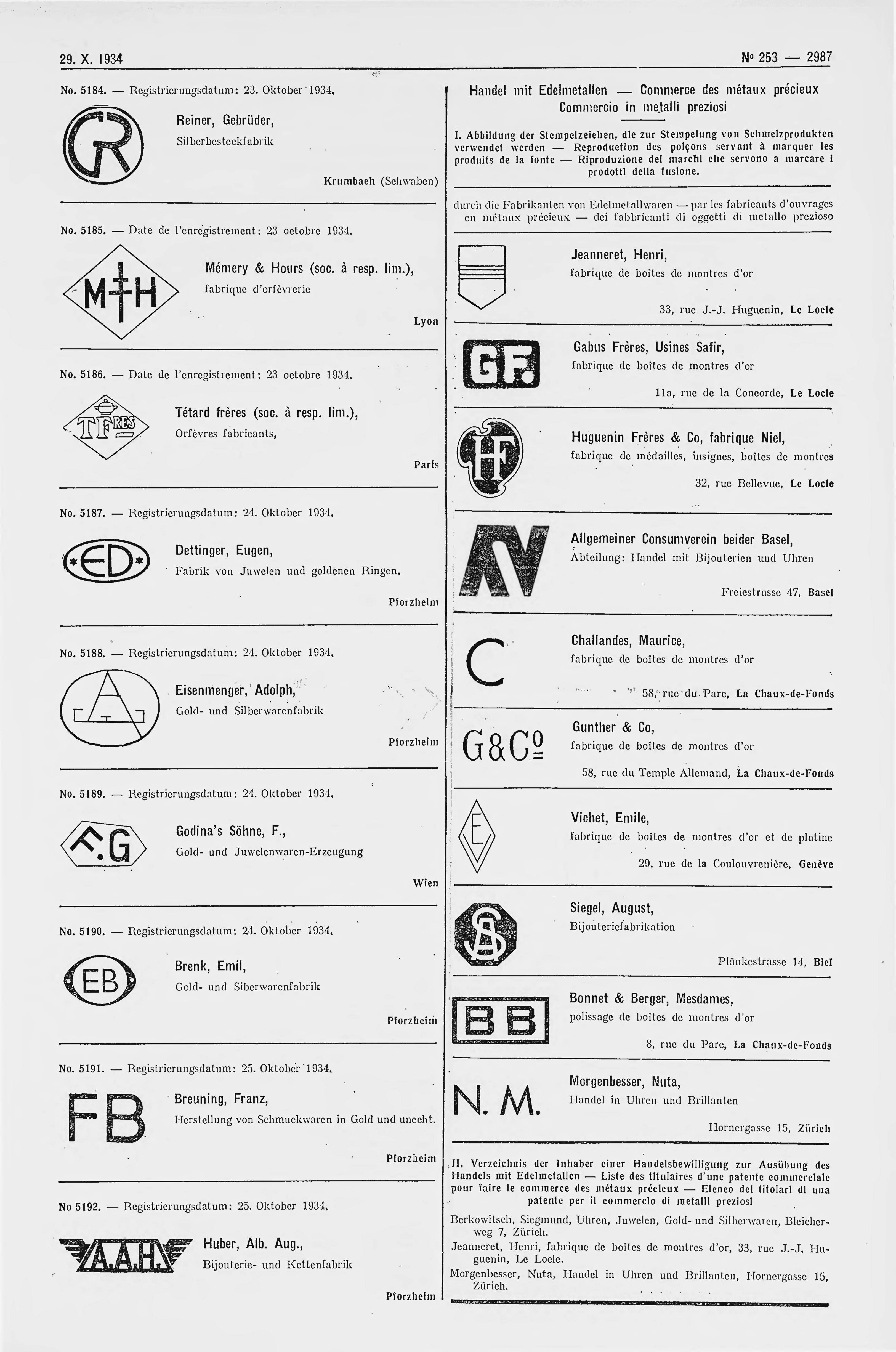
В. ГАБЮ / W. GABUS
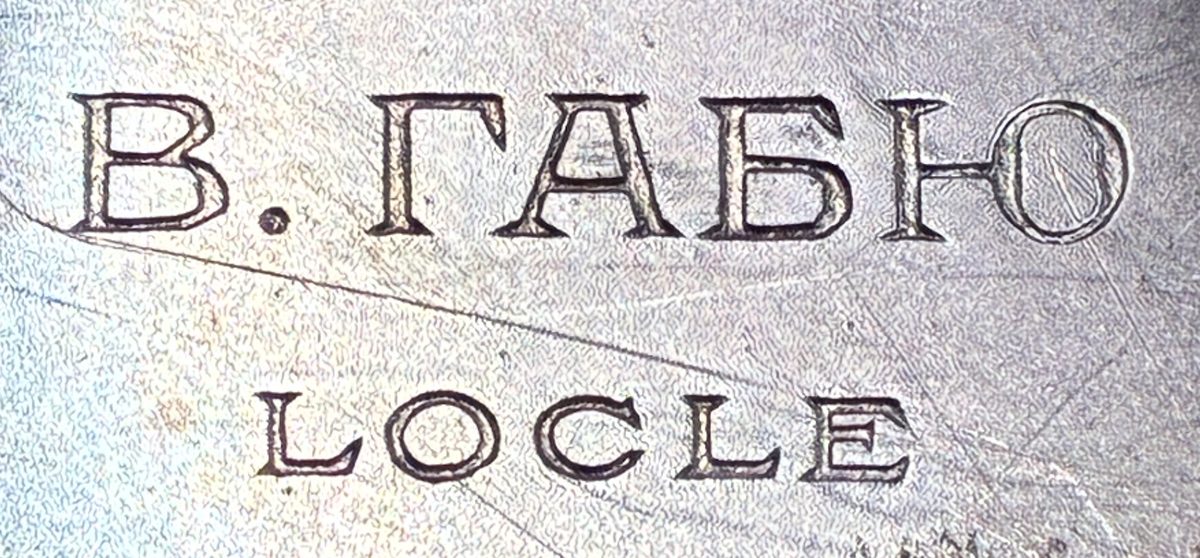
The Moscow house signed its work in both Cyrillic and Latin — В. ГАБЮ and W. Gabus. These forms are documented on the Held trench watch, a First World War officer’s wristwatch, and an Imperial Russian pocket watch, all signed В. ГАБЮ, as well as on the double-signed gold hunter marked W. Gabus. The trench watch additionally carries period hallmarks.
Gabus-Guinand
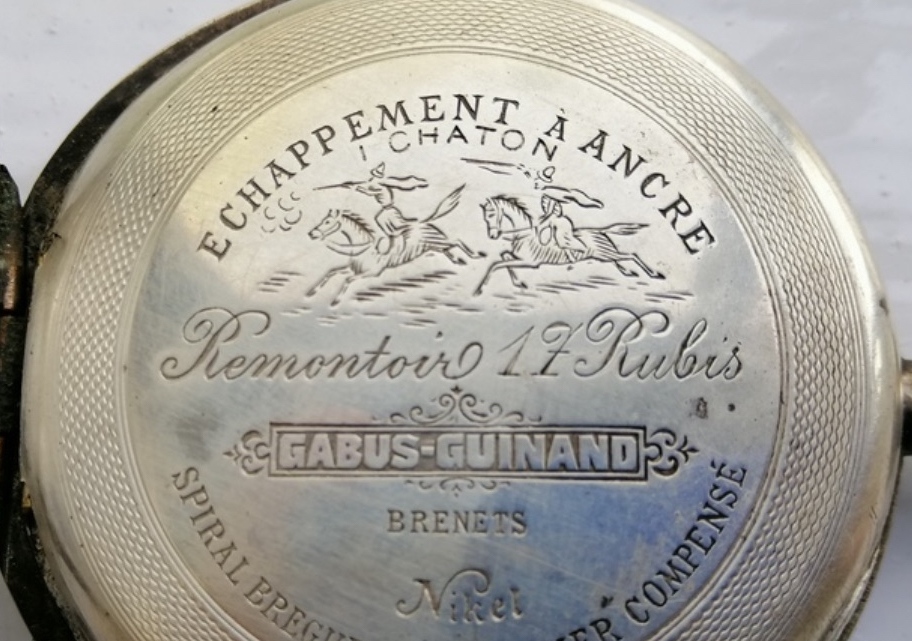
The Les Brenets workshop registered nine Swiss trademarks across four original filing dates between 1887 and 1897, and renewed one of them in January 1908. Surviving casebacks can carry the workshop name and technical specifications; some also bear Russian silver hallmarks.
Sources
Sources: the Schweizerisches Handelsamtsblatt (SHAB); the Poinçon de Maître register (Zentralamt für Edelmetallkontrolle, BAZG); and Mikrolisk, a horological trademark index compiled by collectors. Full sources